
Curator: Nadezhda Dzhakova, PhD
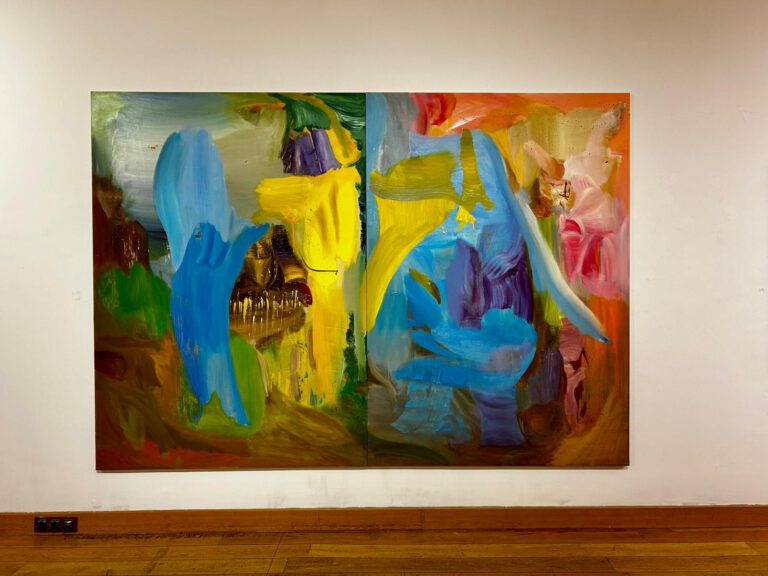
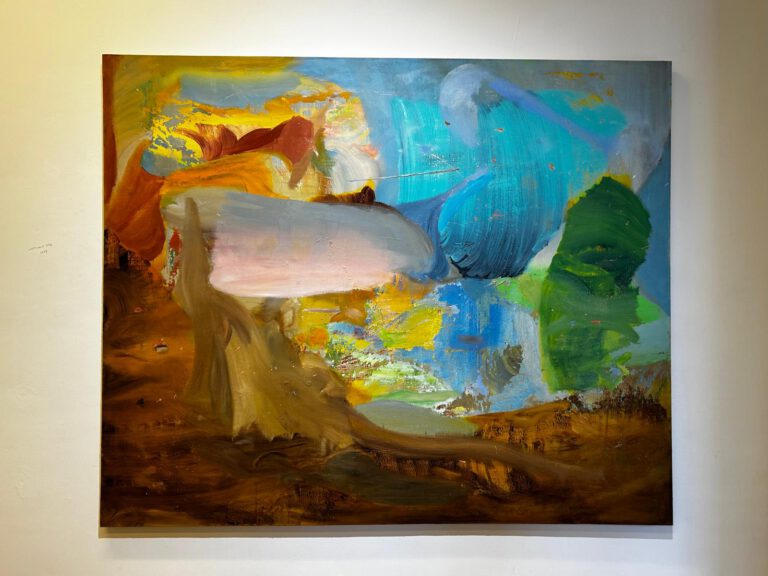
In the exhibition “Accidental Encounters in Added Time”, Milko Pavlov unfolds an exploration of time – as a linear category, and at the same time as plastic material that can be accumulated, erased, and re-applied onto the canvas. The working process, which the artist describes as “drying, rubbing, layering, removing, and adding again,” turns each painting into a field of encounters between different temporal layers. The paintings, resembling memory traces, are not fixed results but rather “zones of condensed time,” where chance plays an essential role.
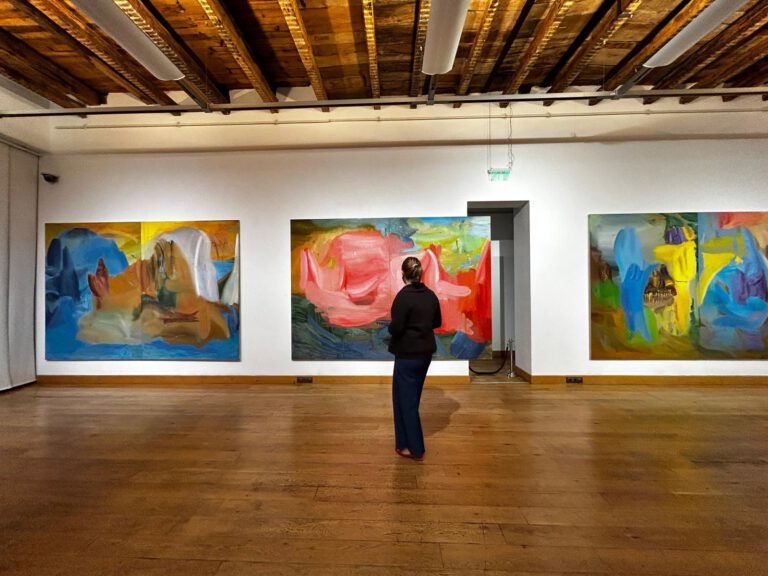
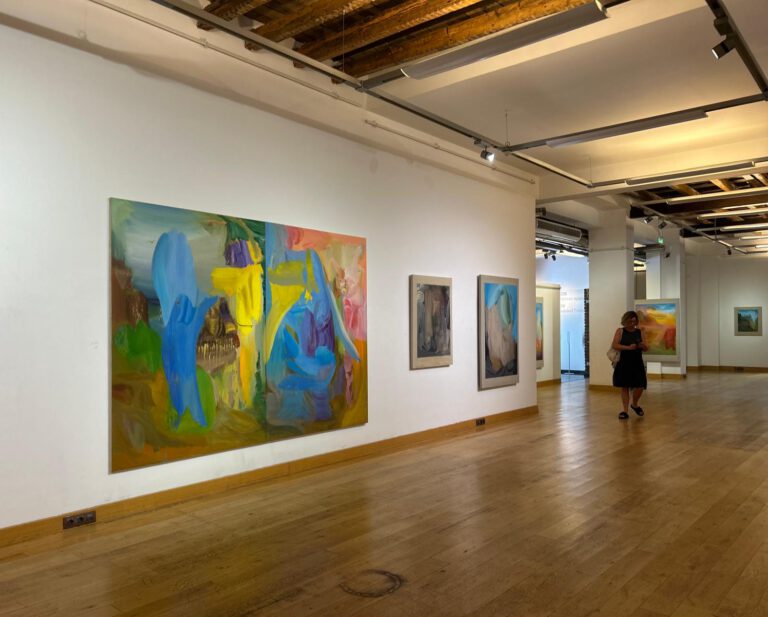
The project is conceived specifically for the space of the Sofia Arsenal – Museum of Contemporary Art. The paintings themselves exist within an expanded temporal frame – they bear the traces of their creation process, continue to live within the exhibition, and retain their presence beyond it. The material itself becomes a reality onto which the artist overlays new layers, creating a sense of “added reality.”
Pavlov is interested in the tension between memory and forgetting, between the plasticity of time and its social normativity. Here we may recall one of Adorno’s observations: the autonomy of art is also its historicity – a form of resistance that preserves its integrity precisely through its refusal to submit to communication. In Milko Pavlov’s paintings, this refusal is represented through visual density, in which time accumulates as layers of paint. Thus, they become “windowless creations,” possessing their own inner autonomy and unique chronotope. The experience of immersing oneself in this time – in an almost fairy-tale or, rather, fantastical way – brings a sense of solace, the reassurance that such a parallel added dimension indeed exists.
“Added time” is both an artistic strategy and a philosophical statement about the state of the contemporary world, in which we simultaneously experience global expansion and contraction – a challenge to our inner sense of endurance and limit. Pavlov’s paintings, constructed through processes of erasure and reapplication, allow us to think of time as a dynamic substance whose traces remain visible on the canvas. In a sense, the crevice leading to the Garden of Eden always reveals a living act – an act of life – and in this likeness, Milko Pavlov’s paintings remain vital in all possible worlds, from the best to the worst.
Through his art, Milko Pavlov directs us toward the experience of time as plasticity. His paintings are “non-coinciding coincidences” – places where linear time disintegrates and the possibility of a larger, though unattainable, image is revealed, accessible only through fragments. Yet the fragment itself is both a humble and profound testimony to boundless hope.
Text: Marianna Georgieva